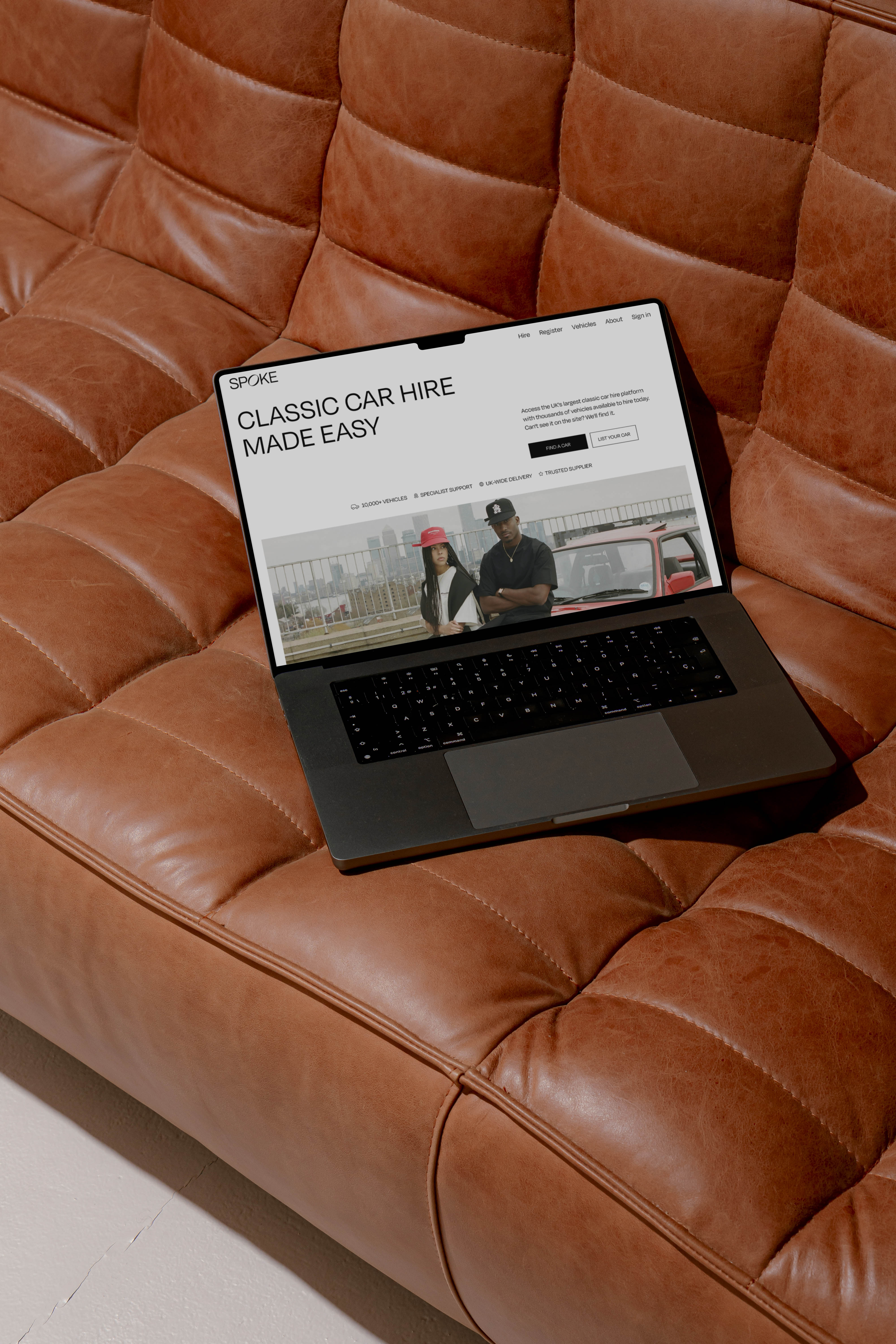
What started as a prototyping tool used primarily by product designers has repositioned itself as a serious website builder, and it's won genuine fans. Framer has had a significant shift. The templates are impressive, the editor is fast, and the barrier to getting something live quickly is genuinely low. The question is increasingly coming up for me, should we build on Framer or Webflow?
I've worked in Webflow for over eight years. I've built and built simple sites or landing pages on Framer. Here's my honest answer.
What Is Webflow?
Webflow is a visual web design and development platform that generates production-grade HTML, CSS, and JavaScript. It has a steeper learning curve than Framer but gives designers and developers far greater control over the output. From pixel-level layout decisions to complex CMS architecture, custom interactions, and logic.
It powers over 3.5 million websites globally, with particularly strong adoption among design agencies, senior freelancers, and businesses that need a scalable, maintainable web presence rather than a fast-launch marketing site.
Where Webflow Wins
Design Control and Custom Output
Webflow gives designers complete control over every element on the page. There are no template constraints, no forced layout patterns, no aesthetic defaults you're working around. The output is precisely what you design and because it compiles to clean HTML and CSS, it doesn't carry the bloat that template-based builders typically introduce.
For a London business that wants a website which reflects its brand accurately, usually Webflow is the right platform.
CMS Power and Scalability
Webflow's CMS is substantially more capable than Framer's. Collections can be nested, referenced, and filtered in ways that Framer doesn't currently support. For a business with a growing case study library, a blog with category and author filtering, a team directory, or any content structure more complex than a basic list, Webflow handles it cleanly.
Framer's CMS is improving, but it is still a relatively young system. Businesses that outgrow it face a migration conversation at exactly the wrong time, usually when they're growing.
SEO Architecture
This is where the gap between the two platforms is most commercially significant.
Webflow gives developers and designers direct control over the technical SEO layer: URL structure, canonical tags, hreflang, schema markup, sitemap configuration, robots.txt, redirect rules, and page-level meta. None of this requires a plugin or a workaround — it's built into the platform and fully accessible.
Framer has improved its SEO tooling, but the level of control is more limited. For a London business competing for search rankings in a competitive market — healthcare, professional services, B2B SaaS — the SEO flexibility gap between Framer and Webflow is meaningful. The businesses I see ranking well on competitive local terms are almost uniformly on platforms that give full technical SEO control. Framer isn't there yet.
If organic search is part of your growth strategy — and for most London businesses it should be — platform SEO capability is not a secondary consideration. It is one of the primary ones.
Performance at Scale
Framer sites perform well at launch. The default hosting is fast and the output is clean. But performance on Framer is harder to optimise as a site grows. More pages, more CMS content, more custom interactions, the level of control over the underlying code is limited.
Webflow on a well-structured build maintains strong Core Web Vitals as the site scales. The architecture decisions made at build time directly effect long-term performance, and Webflow gives experienced developers the control to get these right.
Client Handoff and Long-Term Maintainability
Webflow's Editor gives clients a clean, straightforward interface for updating content, separate from the Designer, which is where the structural decisions happen. This separation is important and means a non-technical team member can update copy, swap images, and add CMS entries without breaking the layout.
Framer's editing experience is less clearly delineated. For clients who need a simple, foolproof content editing interface with guardrails, Webflow's Editor is the more robust solution.
Ecosystem and Integrations
Webflow has a more mature integration ecosystem. Native connections to Zapier, Make, Memberstack, Jetboost, Outseta, and dozens of other tools mean complex functionality, memberships, gated content & experiences, advanced filtering, booking systems, can be added without custom development.
Framer's ecosystem is growing but narrower. For a business with specific integration requirements, Webflow's options are wider and better documented.
What Is Framer?
Framer is a web design and publishing tool that lets designers build and launch websites visually, without writing code. It grew out of a prototyping background and has evolved into a full website builder with hosting, CMS capability, AI-assisted design features, and an extensive template marketplace.
It's gained significant traction among product designers, startup founders, and early-stage SaaS companies, particularly those who need something that looks polished quickly and want to manage it themselves without a developer.
Where Framer Wins
Speed to Launch
Framer is faster to get something live. The editor is intuitive, the template quality is high, and the AI features, which can generate layouts and copy scaffolding from a prompt, meaningfully reduce the time from brief to first draft.
For a startup that needs a landing page live before a product launch, or a founder who wants to test positioning without commissioning a full build, Framer's speed advantage is real and worth having.
Ease of Use for Non-Designers
Framer's editor is more accessible than Webflow's for people without a design or development background. The learning curve is shallower, the interface is less intimidating, and the AI assistance reduces the skill floor for getting a reasonable result.
If the person managing the site long-term is a founder, marketer, or ops manager rather than a designer or developer, Framer's usability is a genuine advantage.
Template Aesthetic
Framer's template marketplace is visually strong. The default aesthetic leans toward the modern SaaS look; clean typography, smooth animations, generous white space and for early-stage tech companies, this can be good enough to ship without significant customisation.
'Good enough to ship' is a legitimate strategy at the right stage of a business. Not every company needs a bespoke, strategy-led website build. If you're pre-product-market-fit and need something credible live quickly, Framer serves that need well.
The Honest Verdict
Framer is a strong tool for a specific use case like creating a visually polished marketing landing page that needs to be live quickly, managed by a non-technical person, for a business at an early stage where speed and simplicity matter more than SEO depth and CMS scalability.
Webflow is the right platform for a business that is building a website as a long-term commercial asset. One that needs to rank in search, handle growing content, reflect the brand precisely, integrate with business systems, and be maintained and expanded over time without accumulating technical debt. This means Webflow still trumps Framer once style guide and design system is sestablished.
I repeatedly seebusinesses launch on Framer because it's fast and the templates look good, and eighteen months later they're commissioning a Webflow rebuild because they've outgrown the platform's SEO and CMS capabilities. That's not a criticism of Framer, it's an accurate description of its ceiling.
More modern landing pages builders like V0 and Loveable are now outperforming Framer due the the speed of which they can learn your design system and build.
If you're commissioning a website you want to still be growing and performing in three to five years, build it on Webflow from the start.
What About the Cost Difference?
Framer's pricing starts lower than Webflow's, and the faster build time means lower development costs on a straightforward project. For a five-page marketing site with no complex CMS, the cost saving is real.
The calculation changes when SEO, CMS, and long-term maintainability are factored in. A cheaper Framer build that requires a rebuild in eighteen months, or that underperforms on organic search throughout its lifetime, is not the cheaper option overall.
Web designer in London
If you're evaluating platforms for a new build or considering migrating from Framer, I'm Will Harvey, a senior Webflow developer and web designer based in Stratford, East London. I've delivered Webflow projects across healthcare, fintech, B2B SaaS, hospitality, and professional services.
Every build is on Client-First architecture, with SEO baked in from the start, a CMS your team can manage, and a site built to perform for years to come.
I'm Will Harvey, a senior freelance website marketer and Webflow developer based in East London. Explore my web design services if you're interested and see how I can help your business.